


We’re increasing the ChatGPT for Academic Researchers program to surrender to 200,000 researchers worldwide free access to ChatGPT.
Participants can use OpenAI’s frontier fashions and get coaching on how to use ChatGPT of their analysis. By default, we don’t use knowledge shared by way of this system to practice our fashions.
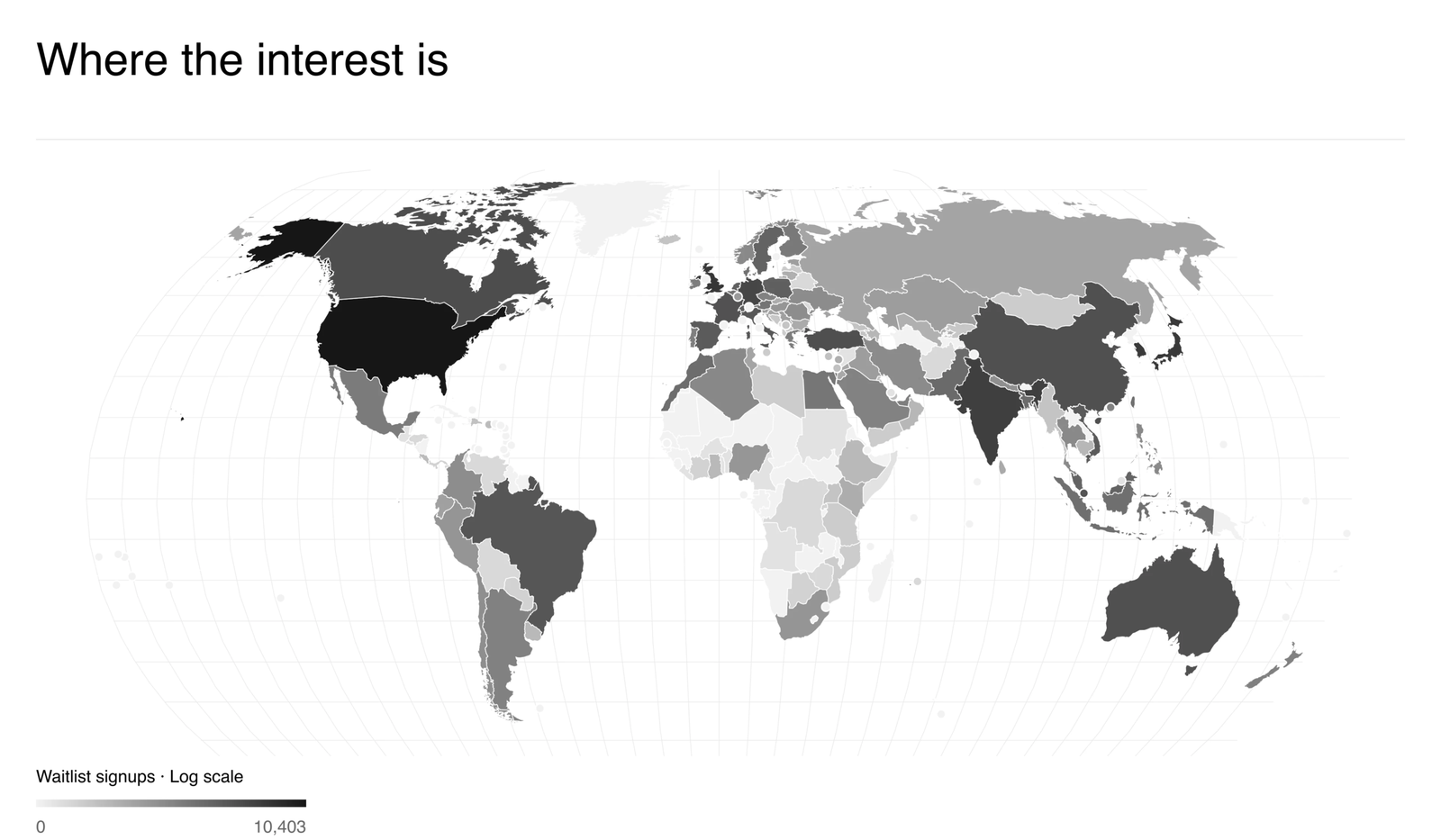
Waitlist signups by nation or territory as of November 12, 2026. Darker colours point out extra signups on a logarithmic scale.
20,000 researchers in 33 international locations have joined this system because the pilot started in July. Shuqi Li, a researcher at Brigham and Women’s Hospital and Harvard Medical School, appears to be like for new drug targets that might in the end shorten tuberculosis remedy. He is exploring whether or not ChatGPT can assist hyperlink lab and affected person knowledge to pace up antibiotic improvement. Arthur Porto, assistant curator of AI biodiversity on the Florida Museum of Natural History, and his group makes use of AI instruments to flip images of museum specimens into searchable databases. They additionally created a 3D mannequin of a butterfly whose wings change coloration as you flip it, similar to the actual specimen.
We’re additionally publishing Science on the Frontier: How Scientists Use ChatGPT, new analysis from our Economic Research group inspecting how greater than 1,800 researchers used ChatGPT throughout this system’s summer season pilot. Surveyed contributors estimated that, with out AI, the identical analysis work on the identical high quality would have taken almost twice as lengthy.
We need extra researchers to have the instruments and assist to pursue formidable questions and make discoveries that enhance individuals’s lives. That is central to our mission of guaranteeing that AGI advantages all of humanity.
The program’s summer season pilot helped us perceive how researchers use ChatGPT and the way we will enhance their expertise. Based on suggestions from researchers, we’re transferring away from lottery-based choice. For the subsequent spherical, we’ll present access to the primary 50,000 purposes who meet the eligibility necessities.
The pilot gave researchers access to ChatGPT Pro. When we reviewed pilot utilization, we discovered that the majority contributors would have stayed inside ChatGPT Plus utilization limits. Based on that discovering, we’re providing Plus for new grants so we will lengthen access to extra analysis groups.
Each grant for this spherical covers the recipient and up to two collaborators, supporting up to 150,000 researchers. Our objective for this system as an entire is to attain 200,000 researchers, double the objective we introduced when the pilot launched in July.
We’ll proceed studying from contributors in regards to the software course of, the capabilities they want, and the assist that helps them use these instruments of their analysis. This suggestions will assist us refine this system and form future rounds.
Different scientific fields will use AI in several methods, and researchers will want totally different varieties and ranges of assist. We’re working with scientific communities to perceive these wants and form our instruments, coaching, and packages round them.
Our assist additionally consists of serving to scientific communities flip AI-generated outcomes into deeper understanding and new discoveries. In arithmetic, we contributed $5 million to a brand new Simons Foundation initiative to assist mathematicians look at, perceive, and construct on outcomes produced by AI.
We’re additionally offering other ways for researchers and establishments to access our instruments. ChatGPT for Academic Researchers is only one method we’re serving to researchers access superior AI instruments.
-
Through ChatGPT Edu(opens in a brand new window), universities may give their campus communities access to ChatGPT for analysis, instructing, and studying, with instruments for analyzing knowledge and administrative controls for managing access.
-
For researchers working in biology, GPT‑Rosalind brings collectively specialised organic reasoning and access to scientific instruments and databases. The Rosalind Academic Plan helps carry these capabilities to eligible labs at U.S. universities, providing up to 30 seats for gratis for up to 12 months. Access to GPT‑Rosalind requires approval by way of our trusted-access course of.
Visit our researcher access information to study extra about ChatGPT Edu, GPT‑Rosalind, and ChatGPT for Academic Researchers.
As these efforts develop, researchers’ experiences will assist us perceive the place our instruments are helpful, the place they fall quick, and what assist is required. We’ll use that suggestions to enhance our packages, develop coaching and studying assets, and create alternatives for researchers to trade approaches with each other.
Our objective is to give extra researchers the instruments and assist to pursue formidable questions—and to maintain bettering that assist as their analysis and our capabilities evolve.
Learn extra about this system(opens in a brand new window).
