

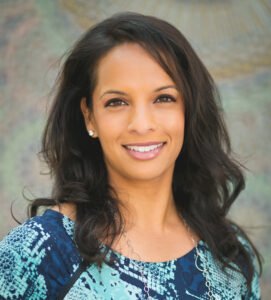
Sandhya Venkatachalam spent the primary half of her profession constructing know-how corporations. She led product at an early knowledge heart {hardware} firm that was bought to Cisco, then turned a product govt at Skype earlier than its sale to Microsoft. Those roles introduced her into knowledge and machine studying years earlier than AI turned enterprise capital’s dominant theme.
She later turned a normal companion at Social Capital, the place she led early institutional investments in AI chipmaker Groq, and later invested at Khosla Ventures. Now she’s founder and managing companion of Axiom Partners, a $52 million fund backing startups that use AI to do work in industries reminiscent of building, industrials and insurance coverage.
This interview has been edited for readability and brevity.
You invested at Khosla Ventures earlier than beginning Axiom. What did you are taking from that have, and what did you need to do in a different way?
Venkatachalam: One factor I took was Vinod Khosla’s open view of the place nice founders can come from. Silicon Valley has gravitated towards a reasonably slim thought of who can construct the following nice AI firm: Someone with a Stanford laptop science or machine studying background, or expertise at OpenAI. We’re on the lookout for extra nonobvious founders, significantly in nonobvious industries.
The different factor was how we take into consideration danger. Instead of asking an organization each conceivable diligence query, we give attention to the dangers that matter for its subsequent set of milestones. Can this workforce do what it says it can do? And if it might probably, might the end result be large?
At Axiom, the largest distinction is that we’ve constructed the agency round people who find themselves actively working with AI. If you aren’t constructing, productizing, pricing or taking AI to market usually, it’s very onerous to maintain up. Our workforce contains folks doing precisely that of their different roles. They assist maintain our funding pondering present, and founders need to work with them as a result of they’ve encountered lots of the identical challenges.
We additionally use AI all through the agency. We’ve constructed what we name the Axiom Brain to assist us make sense of market tendencies, determine attention-grabbing folks and firms, and transfer sooner on diligence and different work. For me, the worth is the flexibility to behave rapidly.
You talked about that a few of these AI practitioners produce other jobs. How does their position at Axiom work?
Venkatachalam: They have devoted time to Axiom and work with us half time. They additionally obtain carry within the fund. They’re companions within the work, reasonably than folks whose names seem on an adviser checklist.
Their different jobs are central to the mannequin. Some of the very best angel buyers are people who find themselves nonetheless working and constructing. I don’t want these folks full time. In reality, they might be much less worthwhile to Axiom in the event that they left the work that retains them near the market.
Axiom says it invests in “AI for the real world.” What does that imply once you’re evaluating a startup?
That might lead us to building, industrials or insurance coverage. Some of these corporations contain {hardware}, sensors or robotics; others are completely software-based. What connects them is that they’re doing work that issues to prospects in real-world industries.
We typically don’t spend money on merchandise that appear to be standard enterprise software program instruments. We need to see AI delivering a end result.
You’ve described a shift from software program folks use to digital staff that carry out jobs. Are prospects truly paying for AI from labor budgets?
Venkatachalam: Yes, and that’s one in every of our funding standards. Even when a portfolio firm is at an alpha or design-partner stage, we do diligence to grasp whether or not prospects are keen to purchase it that means. We’re usually seeing contract values within the a whole lot of hundreds of {dollars}, reasonably than the a lot smaller contracts you may count on for a midmarket software program device.
We’ve seen that purchasing conduct play out throughout nearly all of the portfolio corporations we’ve invested in.
AI merchandise have gotten sooner to construct and simpler to mimic. What makes one sturdy sufficient to turn out to be a big firm?
Venkatachalam: If you’re doing necessary work inside a buyer’s enterprise, and that work is price some huge cash, you turn out to be troublesome to switch. You’re dealing with what we name the final mile of the job.
In industrial settings, for instance, delivering an final result means integrating deeply with the programs prospects use. You have to grasp their knowledge, practice on it, be taught the workflows that matter, and stand behind the end result. That takes greater than placing an interface on high of a mannequin.
Those relationships and capabilities can turn out to be troublesome for an additional startup to copy. They additionally contain work that the big AI mannequin corporations might have little curiosity in doing themselves.
Before Axiom, you backed Groq when AI inference was removed from an apparent funding class. What led you to it?
Venkatachalam: I got here from each {hardware} and software program. At one level, I turned desirous about why Google was constructing its personal networking switches when it might purchase them from current suppliers. As I regarded into that, I discovered it was constructing its personal chips, too.
That led me to Jonathan Ross, who had been concerned in that work and had left to begin Groq. I started studying why giant know-how corporations have been constructing chips to coach fashions. Then Jonathan made the case that the a lot bigger future market can be inference.
How did that have form what you search for now?
Venkatachalam: It taught me the worth of being just a little early and having some endurance. You don’t should be wildly contrarian, however you do should see the chance earlier than it turns into apparent to everybody else.
In a means, our thesis hasn’t modified. We’re nonetheless asking what can be constructed on high of AI infrastructure and fashions. We need to make investments whereas the reply is rising, earlier than there’s a consensus.
What occurs when a type of early bets doesn’t work out?
Venkatachalam: We plan for it. We have a $52 million fund and count on to make 35 investments. We totally count on about half of them to fail, whether or not meaning an organization shuts down or just by no means reaches the expansion trajectory we’re on the lookout for.
The mannequin is determined by discovering an distinctive final result. We want one excellent funding to return the fund. If you make investments early sufficient and the corporate turns into very giant, that may offset many bets that didn’t work.
That willingness to simply accept losses is a part of making investments earlier than a possibility is apparent. It’s constructed into how we strategy the fund.
Related Crunchbase question: